

Key takeaways
- Age often means clay sewer lines, cast iron drains, galvanized or lead water lines, and roots from mature trees.
- In Columbus and Worthington, the sewer line from your house to the city's pipe is yours to maintain.
- A sewer camera inspection shows roots, cracks and sagging pipe early. Get one before you buy, remodel or after a backup.
On this page
- How Old Are the Homes in Central Ohio's Older Neighborhoods?
- What Kind of Pipes Are Under an Older Central Ohio Home?
- What Should You Watch for in Each Neighborhood?
- What Does a Sewer Camera Inspection Show?
- What Are the Warning Signs of Old House Plumbing Problems?
- What About City Sewer and Water Line Programs?
- How Do You Plan Ahead for an Older Home?
- FAQ
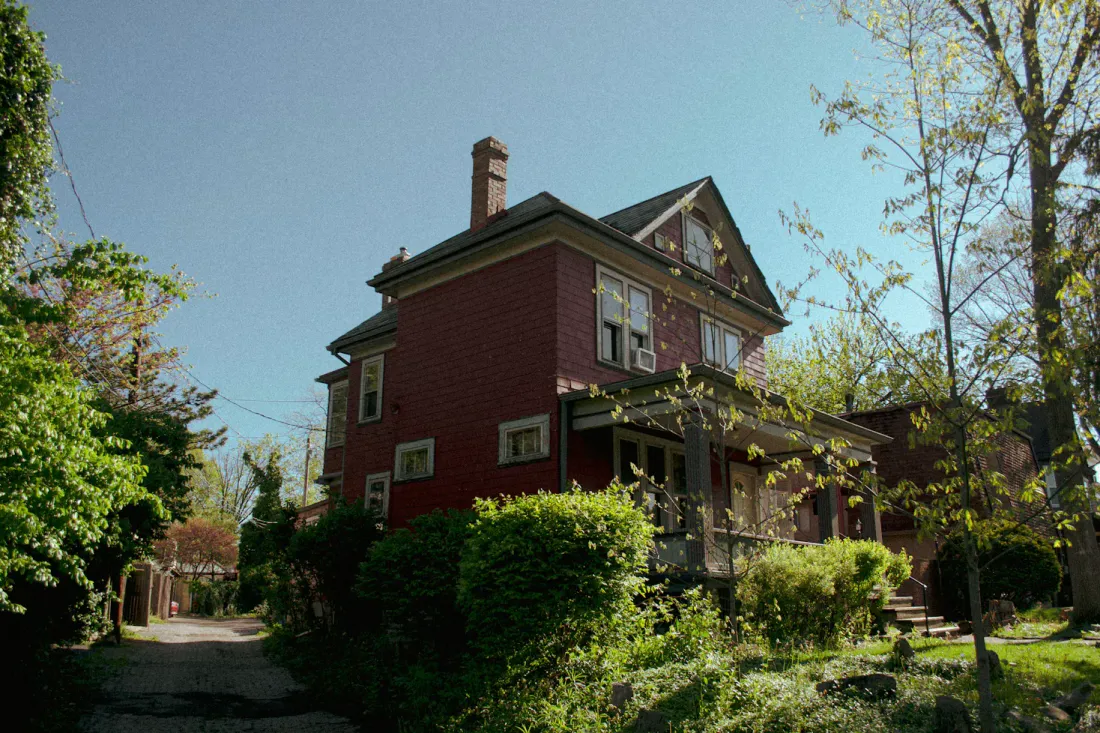
Brick streets. Big front porches. Bungalows built back when streetcars still ran up High Street. The charm of Central Ohio's older neighborhoods is real, and so is the age of what's hidden below it.
Many homes in Grandview Heights, Worthington and German Village still have their original pipes. And after more than 30 years serving homeowners in neighborhoods with the same clay sewer lines and cast iron drains, we've learned that's where most plumbing problems start.
How Old Are the Homes in Central Ohio's Older Neighborhoods?
Many homes in Grandview Heights, Worthington and German Village were built between the mid-1800s and the 1960s, which makes them roughly 60 to more than 150 years old. A lot of them still rely on plumbing from that era.
| Neighborhood | Housing age | What you'll find |
|---|---|---|
| Grandview Heights | In Grandview Heights, 1,798 of 4,238 housing units (about 42%) were built in 1939 or earlier | Pre-war homes on tree-lined streets |
| Worthington | Founded in 1803. Most homes are mid-century: 3,411 of 6,406 housing units (about 53%) were built between 1950 and 1969 | Historic homes near the village green, plus mid-century ranches and split-levels on mature, tree-lined streets |
| German Village | Developed mainly between 1840 and 1914, and listed on the National Register of Historic Places in 1974 | Small brick cottages and rowhouses on tight lots |
Age alone doesn't mean a pipe has failed. It does mean it's worth knowing what you have before something goes wrong.
What Kind of Pipes Are Under an Older Central Ohio Home?
Older Central Ohio homes commonly have a clay sewer lateral, cast iron drains inside the house and galvanized steel or copper water pipes. In Columbus, some homes built before 1964 may still have a lead water service line. Each material has its own weak spots, from roots in clay joints to rust inside iron and steel.
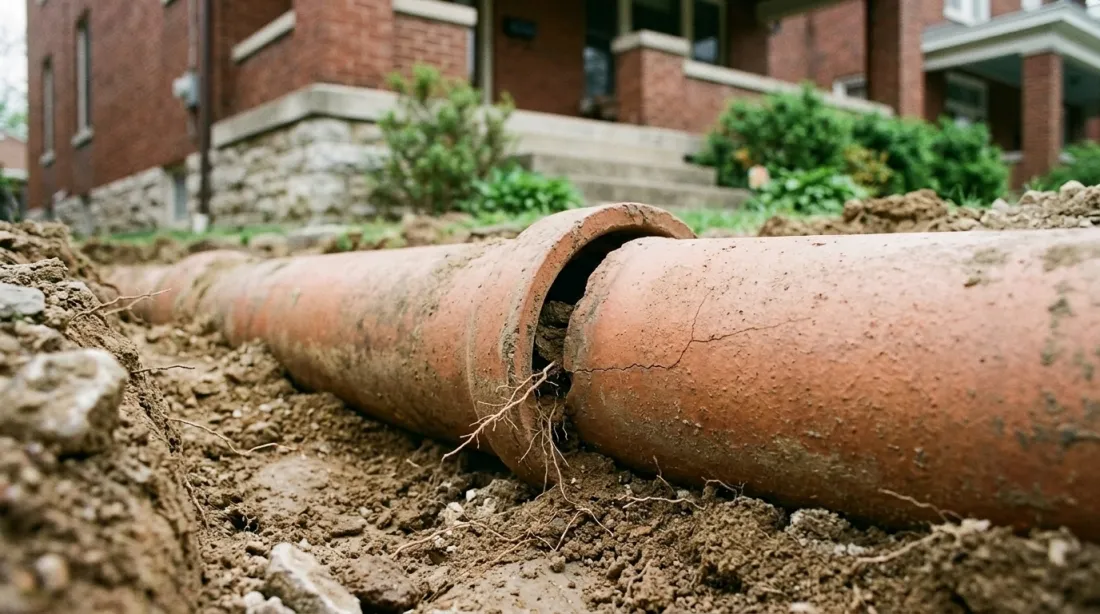
Clay sewer laterals. The lateral is the pipe that carries everything you flush or drain from your house to the city sewer. The City of Columbus explains that in older homes, the lateral is usually clay pipe, which can crack or fill with tree roots over time. Clay sewer pipe was laid in short sections, and every joint between them is a spot where roots can slip in. Here's more on tree roots in your sewer line.
Cast iron drains. Cast iron is heavy and strong, which is why it was used for drain and waste lines for so long. With cast iron pipes in old houses, we often find rust building up from the inside. That buildup narrows the pipe, catches debris and can eventually lead to cracks or leaks.
Galvanized water lines. Galvanized pipe is steel coated with zinc. As the coating wears away, the steel underneath rusts. The signs we usually see are low water pressure and brown or rusty water.
Lead service lines. This is the pipe that brings drinking water into your home. The City of Columbus says homes built before 1964 may still have a lead service line, and homes built before 1989 may have copper pipes joined with lead solder. If your home was built after 1965, the City says you don't have a lead service line.
What Should You Watch for in Each Neighborhood?
Every home is different, but each neighborhood has a few things worth knowing.
Grandview Heights
Many Grandview homes may still have their original sewer lateral. Mature trees make root problems more likely. Slow drains that come back a few months after cleaning are often the first clue.
One thing to keep in mind: Grandview Heights is its own city, separate from Columbus. Its rules and services can differ, so check with the city if you're not sure where your responsibility ends. Our Columbus office sits in the Grandview Heights area, and you can see what we do locally on our Grandview Heights plumbing page.
Worthington
Worthington has two kinds of older homes. The historic houses around the village green are part of the Worthington Historic District, listed on the National Register of Historic Places. Most of the city's homes came later: more than half were built between 1950 and 1969, so many are now over 55 years old and may still have their original sewer lateral. Mature trees along those streets make root problems more likely.
Like Grandview Heights, Worthington is its own city, separate from Columbus. The City of Worthington says the sewer lateral, including the wye where it connects to the city's main, is the property owner's responsibility.
German Village
Homes here sit close together and close to the street, so sewer lines often run under garden walls, patios and brick walkways, which can make repairs tricky.
The public sewers here are old, too. In one case, a large combined sewer collapsed under South Pearl Alley, backing up flow and flooding part of South 3rd Street.
A combined sewer carries both stormwater and wastewater in the same pipe. That was city pipe, not a homeowner's lateral, but it shows how much old infrastructure sits under the neighborhood. For help with your own line, talk to our plumbers in German Village.
What Does a Sewer Camera Inspection Show?
A sewer camera inspection sends a small waterproof camera through your sewer line so you can see the inside on a screen. It can reveal tree roots, cracks, separated or offset joints, sagging sections called bellies, grease buildup and collapsed pipe. It's one of the easiest ways to find a problem without digging.
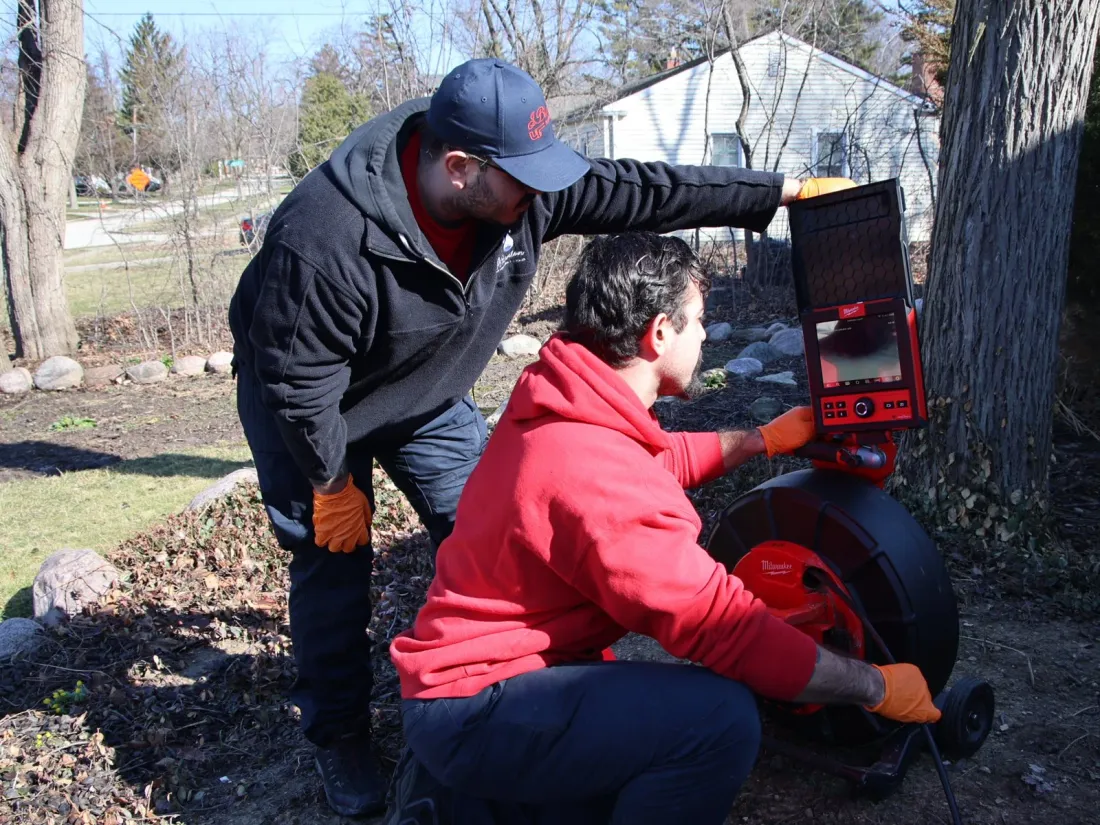
This matters because the lateral is your pipe. In Columbus, the City says homeowners are responsible for maintaining their lateral pipes, while the City takes care of its own part of the system. Worthington's rule is the same. If roots or a crack cause a backup in your lateral, the repair is on you.
Here's when a camera inspection makes the most sense:
- Before you buy a house, especially an older one. You can't see a sewer line during a walkthrough.
- Before a remodel, like adding a bathroom or finishing the basement.
- After a backup, so you know what caused it.
- When clogs keep coming back, especially in more than one drain.
- If you've never had one, especially with big trees and an original lateral.
Most inspections start at a cleanout, a capped pipe that gives access to the sewer line. If you're not sure where yours is, here's what a cleanout plug is and how it works.
When we run a sewer camera inspection, we show you the footage and explain what we found in plain English. Then we walk you through your options and give you a flat rate before any work begins.
What Are the Warning Signs of Old House Plumbing Problems?
Old pipes usually give hints before they fail. Watch for these:
- Several slow drains at once. One slow sink is usually a local clog. Slow drains in several fixtures can point to the main line. Here's how to tell if your main sewer line is blocked.
- Gurgling from toilets or drains when you run water somewhere else.
- Sewer smell in the basement or yard.
- Water coming up through a floor drain, especially after heavy rain.
- Brown or rusty water from the tap.
- Low water pressure that keeps getting worse.
- Soggy or extra-green patches in the yard along the sewer line's path.
Heavy rain makes backups more likely. A cracked lateral lets rainwater into the sanitary sewer, and the City of Columbus explains that system wasn't designed to carry rainwater, so the extra water can push sewage back into basements.
Any one of these is worth a closer look. Two or more together is a good reason to call. If sewage is already backing up, don't wait. Our team is available 24/7.
What About City Sewer and Water Line Programs?
The City of Columbus runs several programs aimed at aging sewer and water lines. These include sewer lining in some neighborhoods, a backflow device program for homes with reported sewer backups, and a long-term effort to replace lead service lines. Eligibility depends on your address and situation, so check with the City directly.
A quick overview, for general information:
- Sewer lining. Through Blueprint Columbus, the City has lined sewer mains and laterals in some Columbus neighborhoods to keep rainwater out of the sanitary sewer.
- Backwater valves. The City's Project Dry Basement program covers an approved backflow device for eligible single and two-family homes that had a sewer backup. The backup must be reported to the City first.
- Lead line replacement. Columbus is working to replace lead and galvanized water service lines across the city.
These programs are run by the City of Columbus. If you live in Grandview Heights or Worthington, check with your city about what applies to you.
How Do You Plan Ahead for an Older Home?
You don't have to give up an older home's charm to avoid old house plumbing problems. Just go in knowing three things:
- The pipes may be as old as the house.
- In Columbus and Worthington, the sewer line from your house to the city's pipe is your responsibility.
- A camera inspection is one of the easiest ways to see what's down there.
If you're buying, remodeling or dealing with slow drains or a backup, our plumbers can run a camera through your line and show you exactly what they find.
When you need a plumber in Columbus, Make a Good Call. Call 614-547-6516 or schedule service online.
Frequently Asked Questions
Who is responsible for the sewer line in Columbus?
The City of Columbus says homeowners are responsible for maintaining their sewer lateral, the pipe that runs from the house to the city sewer. The City maintains its own part of the system. In Worthington, the City says laterals, including the wye at the main, are the property owner's responsibility. Grandview Heights is a separate city, so check its rules if you live there.
Do older Columbus homes have lead pipes?
Some do. The City of Columbus says homes built before 1964 may still have a lead water service line, and homes built before 1989 may have copper pipes joined with lead solder. Homes built after 1965 don't have lead service lines, according to the City.
Should I get a sewer inspection before buying a house?
Yes, especially if the house is older. You can't see a sewer line during a walkthrough, and many homes in Grandview Heights, Worthington and German Village may still have their original sewer lateral. A camera inspection shows roots, cracks or sagging pipe before you close.
Why do tree roots get into older sewer lines?
Older laterals are often clay pipe laid in short sections. Roots grow toward moisture and can slip through the joints between sections. The City of Columbus notes that clay laterals in older homes can crack or fill with tree roots over time.
How often should an older home get a sewer camera inspection?
There's no single rule. Good times to schedule one are before buying, before a remodel, after a backup or when clogs keep coming back. If your home has its original clay lateral and large trees nearby, regular checks help catch root problems early.
 Roots in Your Sewer LineRead article
 J. Blanton Plumbing Is Now Serving Columbus and Central OhioRead article